BRAND STORY
Kokuyo
The unfussy Osaka stationery house behind Campus notebooks and a quiet century of well-designed everyday writing tools.
From paper-cover account books to Japan’s default notebook
Kokuyo was founded in Osaka in 1905 by Zentaro Kuroda, who began by making paper covers for Japanese double-entry account ledgers. The company name derives from kokumin no kageyo — roughly, “a contribution to the nation’s pride” — a typical late-Meiji-era framing for an industrial venture. The early business was steady but unspectacular: account books, ledgers, file folders for small Osaka businesses.
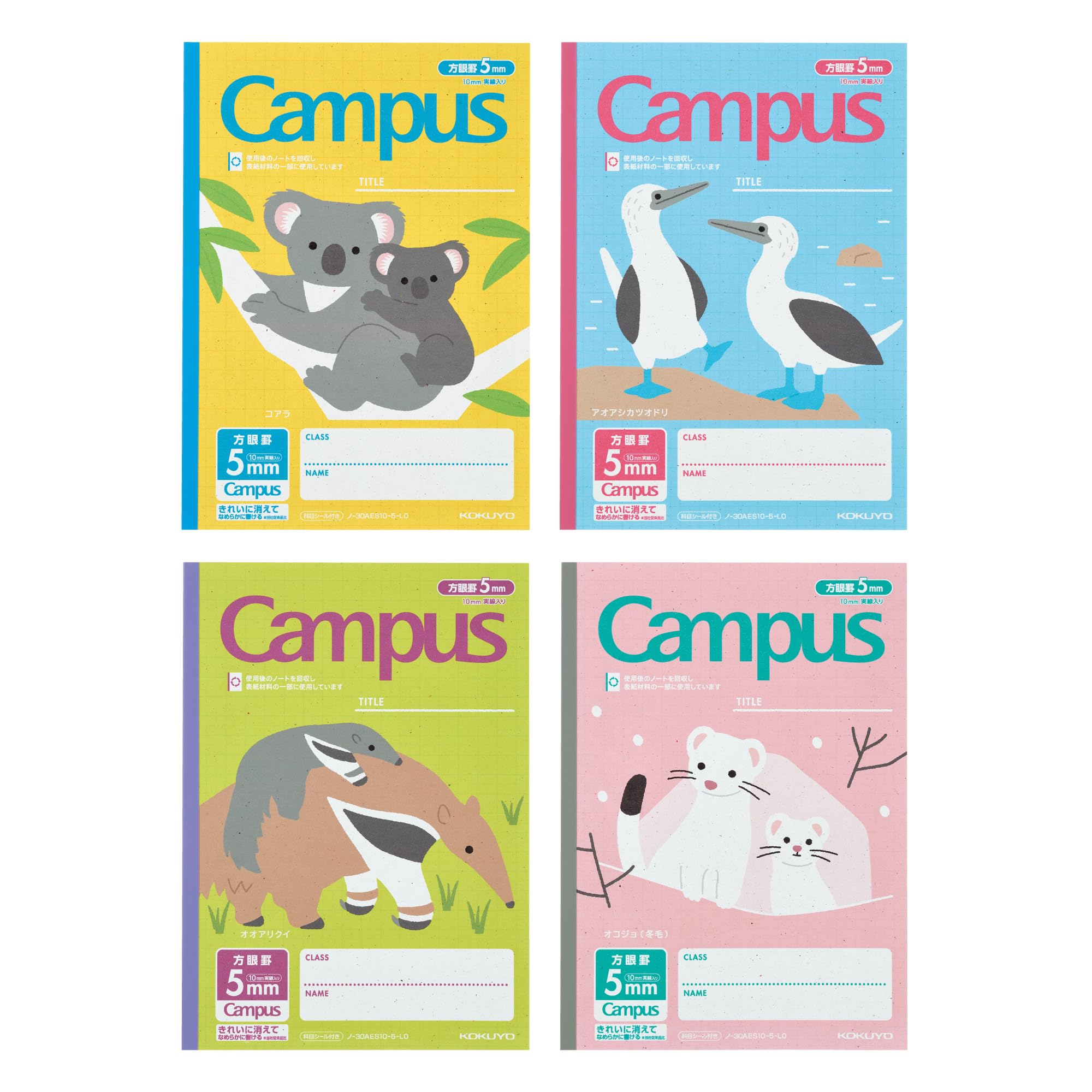
The defining turn came in 1959 with the launch of the Campus notebook, a thin wirebound notebook with a soft pulp cover and ruled pages, designed and priced explicitly for Japanese school students. The Campus line was made for daily classroom abuse: it stayed under 100 yen for decades, accepted pencil and ballpoint cleanly, and had a perforation pattern that made the pages easy to tear out for homework. The Campus notebook quickly became the default Japanese school notebook and has held that position for over half a century, with cumulative production estimated above 3 billion units.
The design philosophy of the unremarkable
Kokuyo’s catalog is interesting precisely because most of it is not interesting at face value — and that is the design philosophy. The company makes everyday tools that try to disappear into use: a stapler shaped exactly like a stapler, a binder clip in exactly the geometry a binder clip should be, a notebook that looks like a notebook. There is no special cover material, no collectible color palette, no minimal logo. The point is the paper and the writing, not the cover.
This is a meaningful contrast against more design-forward Japanese stationery brands like Hobonichi or Traveler’s — those are objects you treasure individually. Kokuyo is the stationery you reach for fifty times a year without thinking. Both philosophies have their place, and Japanese desks routinely mix them: a Hobonichi planner for daily journaling, a Campus notebook for meeting notes.
The Sarasa Clip, Dotliner, and other quiet hits
Beyond Campus, Kokuyo runs a wide office-products catalog that produces a steady stream of well-engineered small tools. Highlights include:
- Dotliner — a refillable double-sided adhesive roller that lays down a precise dotted pattern of glue. Used in scrapbooking, paper crafts, and journaling. The cult version of the office glue stick.
- Soft Ring notebooks — a wire-bound notebook where the rings are wrapped in soft silicone so the hand resting on the spiral does not get pinched. A small ergonomic fix nobody else thought to make.
- Jibun Techo (“My Notebook”) planner system — a yearly planner with a unique time-tracking format that runs parallel rather than vertical columns for each day. Quiet cult following among productivity nerds.
What to buy first
If you are new to Kokuyo, three picks cover most use cases:
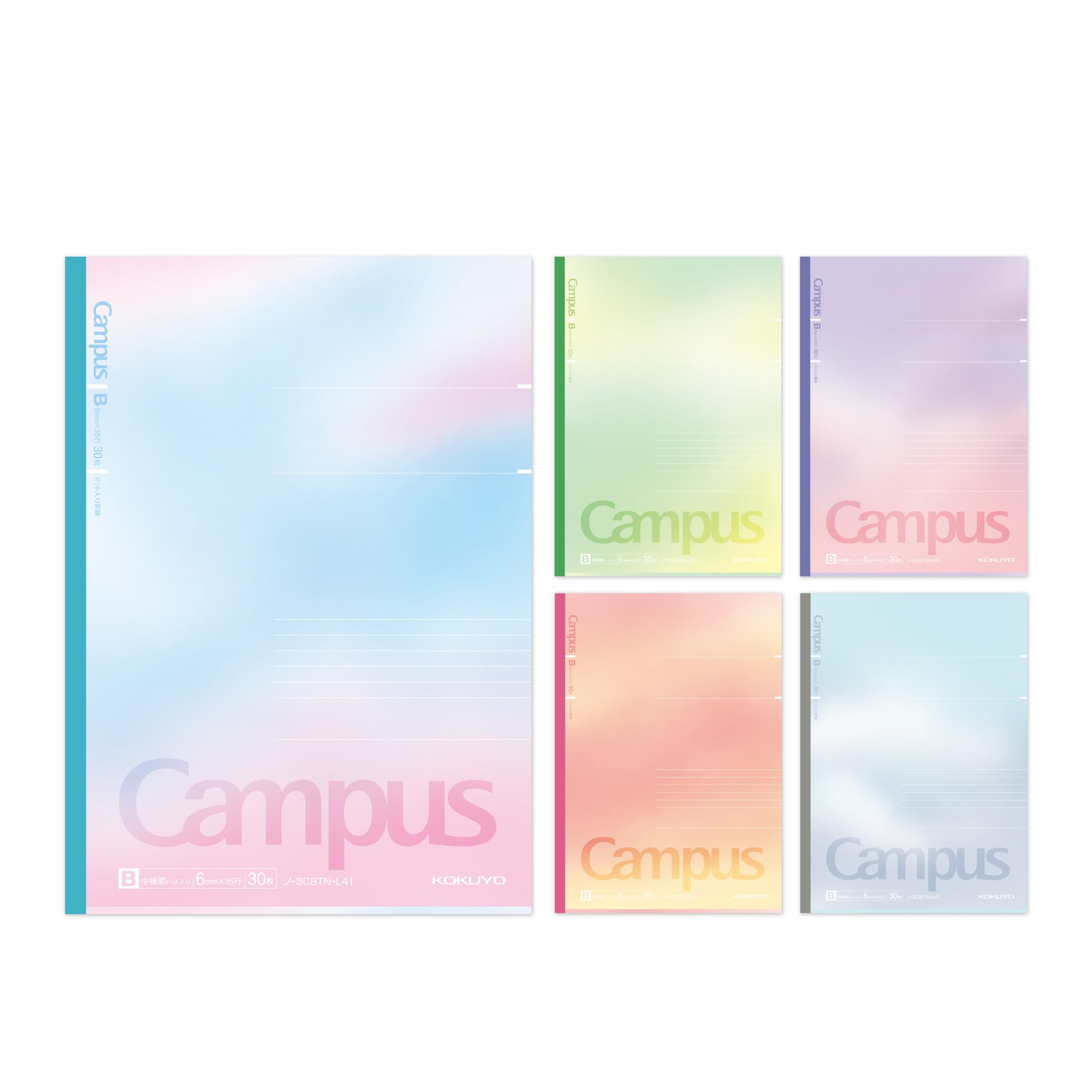
- Campus Notebook (B5 or A5, dot-ruled) — the entry point. The dot-ruled version is the most popular outside Japan because it works as both a ruled and grid notebook. Cheap and reliable.
- Soft Ring Notebook — the upgrade from a standard wirebound. A6 fits in a pocket; A5 is the daily-driver size. Silicone-coated spiral is the killer feature.
- Dotliner — the small office tool that instantly justifies its keep. Pair with a refill pack.
All ship from our Tokyo hub in protective mailers. Notebooks ship flat in stiffened cardboard sleeves.
Shop Kokuyo
The most-loved Kokuyo pieces in our catalog right now.



Caring for paper notebooks
Store notebooks flat or upright in moderate humidity. Campus paper is uncoated and slightly absorbent, which is ideal for pencil and gel pen but can feather with very wet fountain pen ink — if you write with broad fountain pen nibs, consider the Soft Ring line, which uses a slightly heavier paper stock.
Kokuyo notebooks are not archival paper — they are made for daily use, not for storage. For long-term archival of important documents, transfer to acid-free paper storage.