BRAND STORY
Kutani Ware
Three and a half centuries of overglaze porcelain from Ishikawa — five historical styles, painted by hand, valued as Japan's most expressive ceramics.
The lord, the kiln, the silk-road colors
Kutani ware traces back to roughly 1655, when Maeda Toshiharu, the second daimyō of Daishōji domain in modern Ishikawa Prefecture, dispatched a retainer named Goto Saijirō to study porcelain-making in Arita (Kyushu). On returning, Goto opened a kiln in the village of Kutani — set among silver mines whose workers had discovered local porcelain stone. That first generation of work, roughly 1655–1715, is now called Ko-Kutani ("old Kutani") and is among the most valuable Japanese porcelain on the international auction market.
What made Kutani distinctive from the start: bold overglaze enamels in green, yellow, dark blue, purple, and dark red (the "Kutani five colors," 九谷五彩), painted thick enough that the surface has visible texture. Where Arita ware emphasized fine cobalt-blue underglaze line work, Kutani embraced filled-in color and densely composed scenes. The aesthetic descended from Chinese polychrome porcelain that reached Japan via trade with the Ming and early Qing dynasties — Silk Road colors interpreted by Japanese painters.
Why Kutani disappeared and came back
The original Kutani kiln closed around 1715 for reasons that historians still debate (a feud between potters and the daimyō, exhaustion of the local clay source, financial pressure from a series of bad harvests — likely all three). Production stopped for nearly a century.
The revival began in 1807 when Yoshidaya Den'emon, a Daishōji merchant, financed a new kiln near the original site. His potters worked in a deliberately archaic style — heavy enamels, full-surface filled designs — which became known as Yoshidaya. Around the same period, other kilns opened in Komatsu and Kanazawa producing their own variants: the gilded miniature-painting style of Iidaya (also called Akae for its red-dominant palette), and the technically virtuosic Shoza style developed by the potter Kutani Shōza in the late 1800s. Together these are the "five styles" collectors still reference today.
The five styles, quickly
Ko-Kutani (古九谷, c.1655–1715)
The original. Bold five-color enamels, frequently with intentional negative space painted in pale green or yellow. Subjects: phoenixes, dragons, peonies, mountain landscapes. Genuine Ko-Kutani is essentially museum-only at this point; modern "Ko-Kutani style" pieces reference these designs at affordable prices.
Mokubei (木米, early 1800s)
Named for the potter Aoki Mokubei. Red-dominant palette, dense overall painting, inspired by Chinese export porcelain. Less common than Yoshidaya in modern production.
Yoshidaya (吉田屋, 1807 onward)
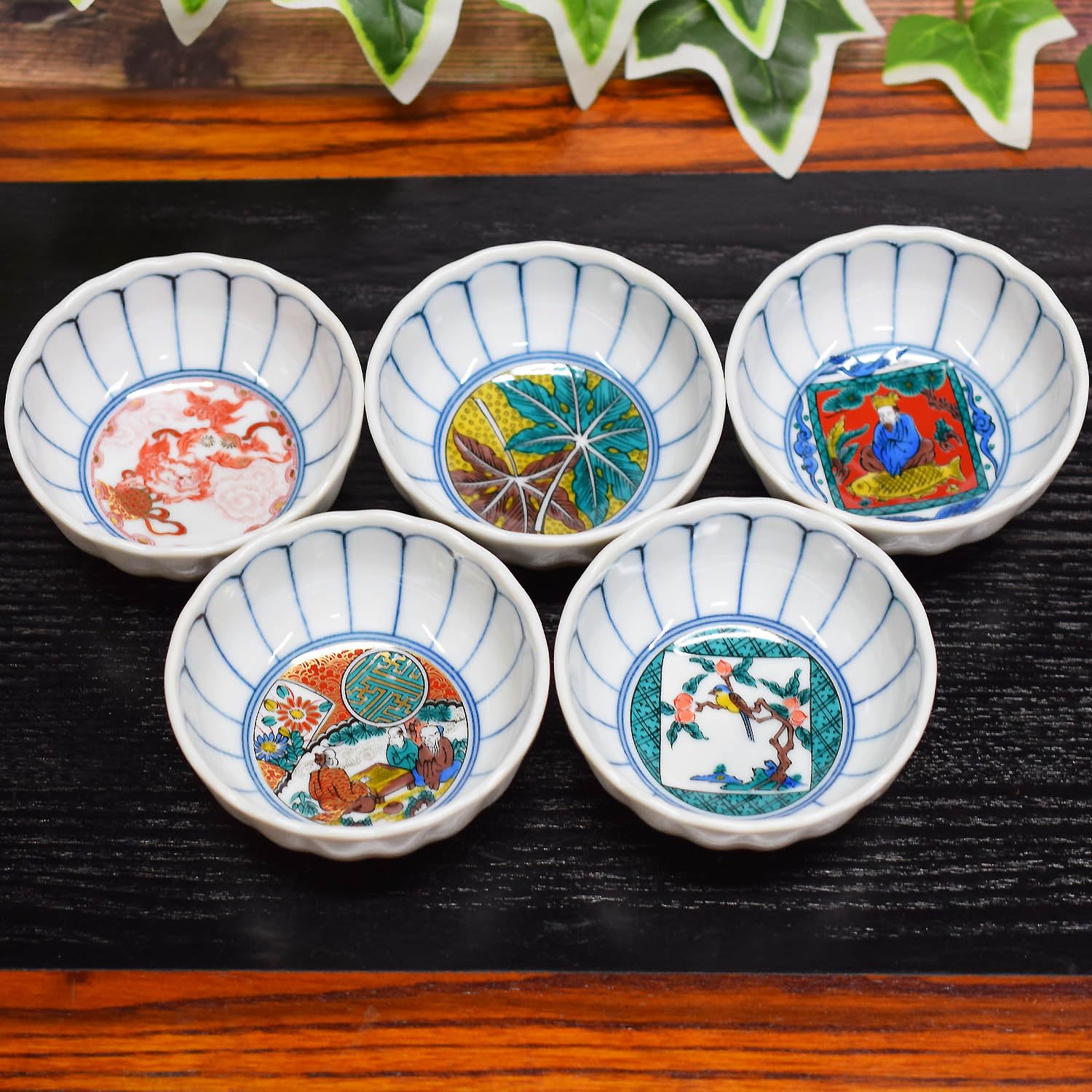
Heavy green-yellow-purple enamels, full-surface compositions, no white space. The most distinctive Kutani style and the most widely produced today. If you've seen a Japanese sake cup with dense green-and-yellow floral painting, it's probably Yoshidaya style.
Iidaya / Akae (飯田屋, mid-1800s)
Red iron-oxide overglaze with gold accents and miniature painting (often hundreds of figures or characters on a single bowl). Technically demanding — the surface is so densely painted that a small bowl can take a master painter a full day. Premium price tier.
Shoza (庄三, late 1800s)
A virtuosic synthesis of all earlier styles, developed by Kutani Shōza to compete with European porcelain after Meiji opening. Mixes red overglaze, gold, blue, green — basically "all techniques on one piece." Commonly seen in larger display pieces.
What we carry
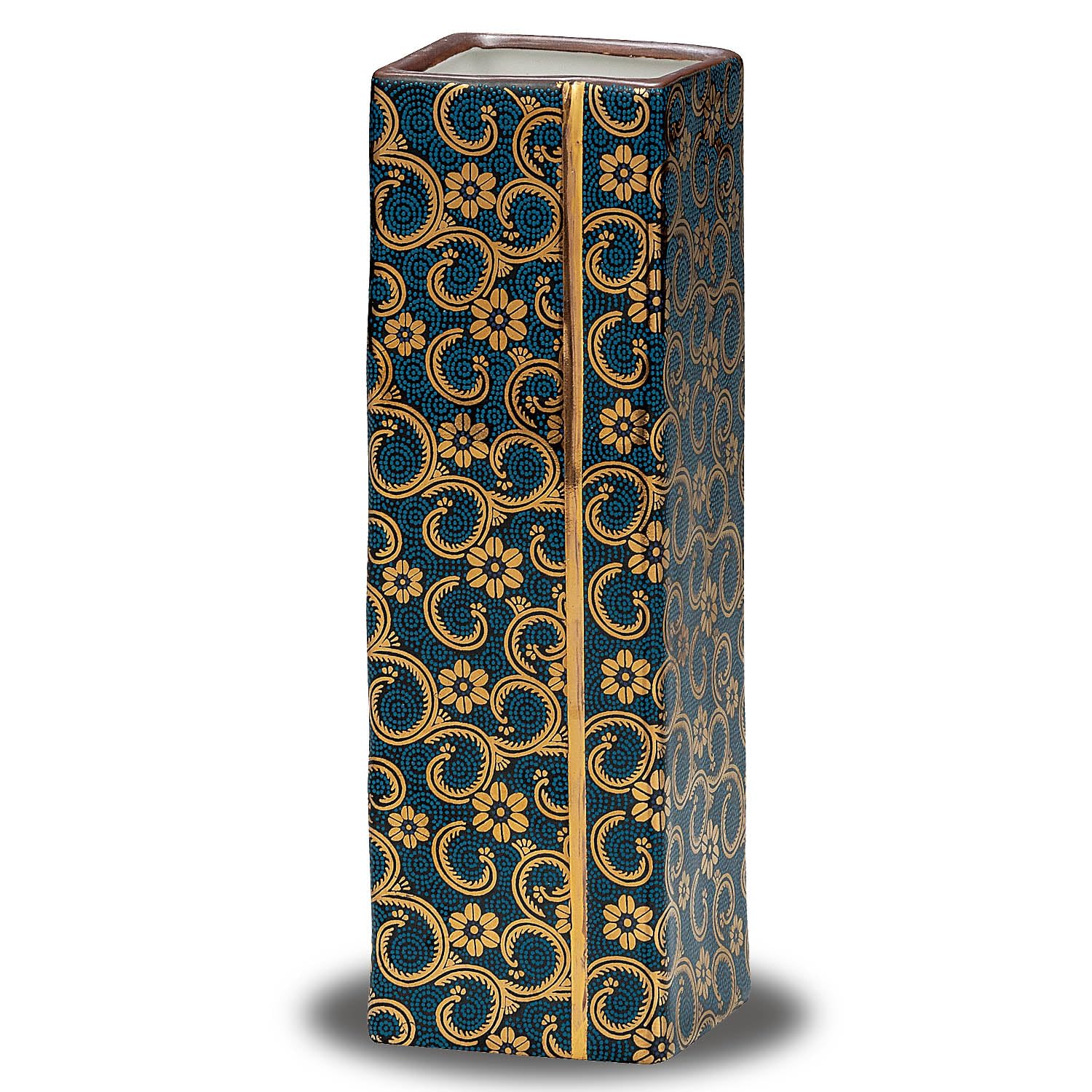
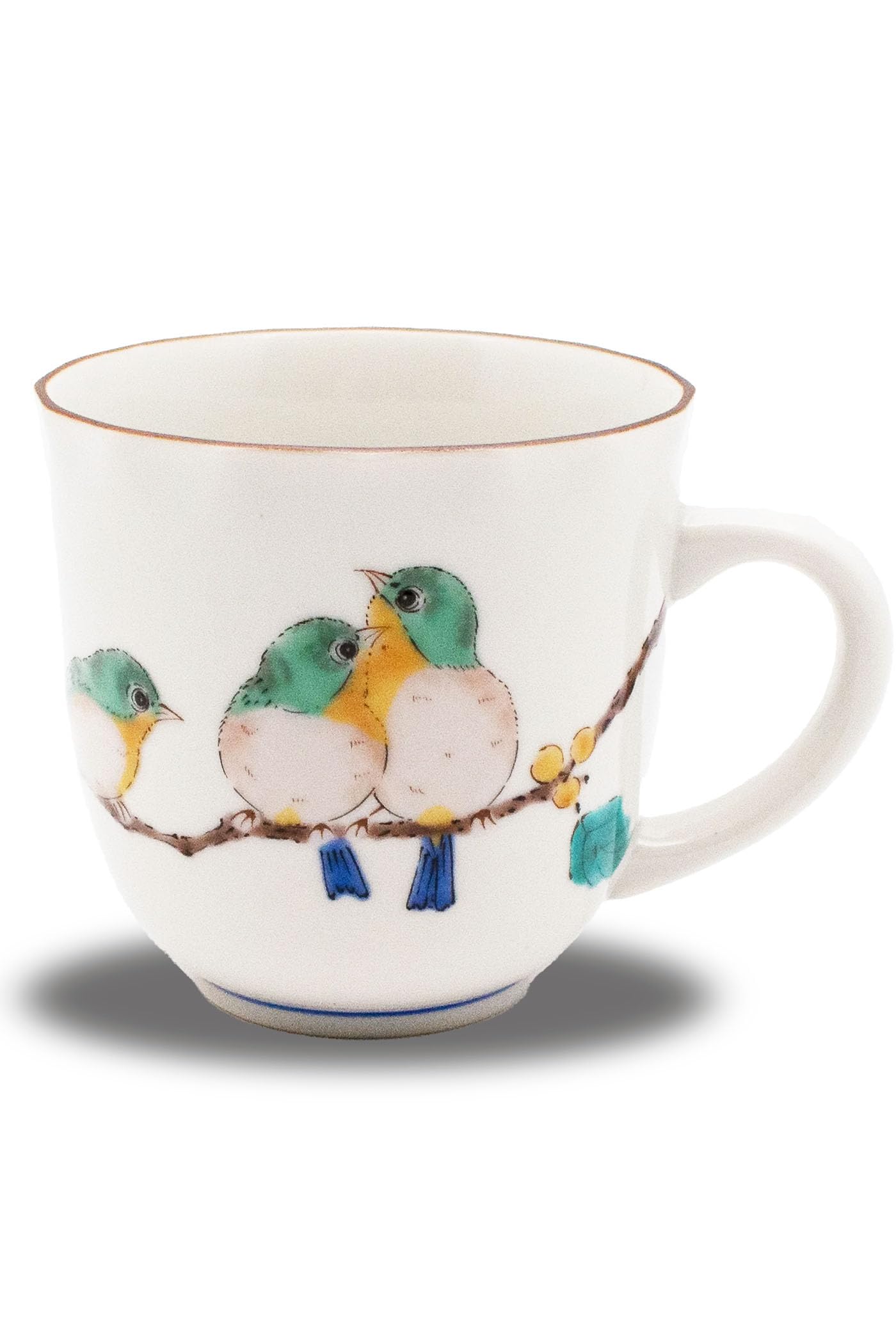
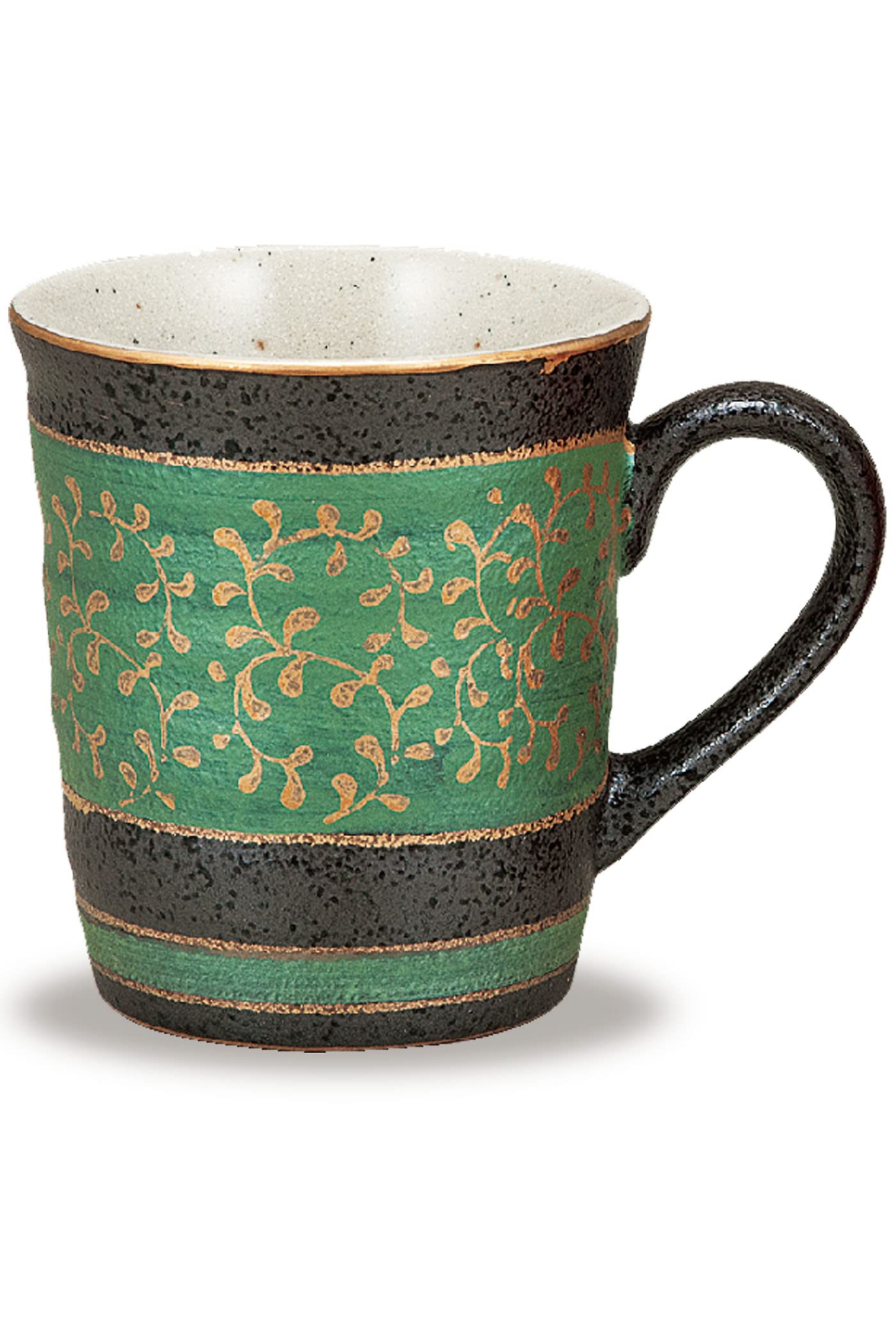
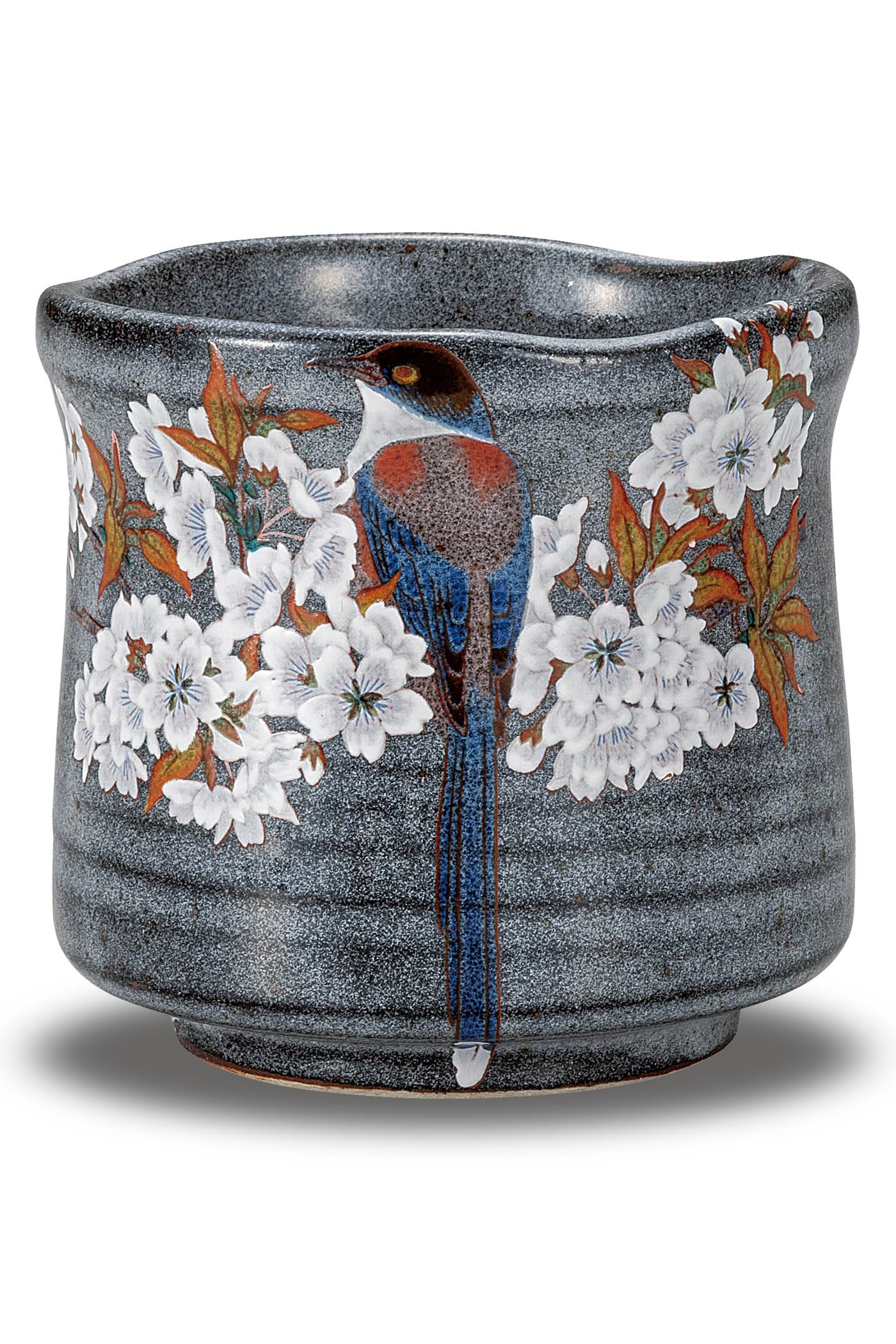
Our Kutani selection focuses on contemporary pieces in the Yoshidaya and Iidaya styles — small plates, sake cups, tea cups, and rice bowls in the $30–80 range. Most are from working Komatsu and Nomi kilns that have been operating for two or three generations. We avoid generic "Kutani-style" pieces from outside Ishikawa (which exist in the market and are not genuine Kutani-yaki).
All Kutani pieces are hand-painted, so individual color saturation and brush stroke detail varies between pieces. This is a feature, not a flaw. If you want two matching pieces, order two of the same SKU — they will be similar but not identical.