SETUP GUIDE
Building a Tokyo desk setup
Six things that turn a desk into a workspace people actually use. Each pick is one we'd put on our own desk — and each one has been on a Tokyo desk for decades before it landed on yours.
What “Tokyo desk” actually means
There's a cliché version of the Japanese desk — minimalist, monastic, beige. That version mostly lives on Pinterest boards and doesn't survive contact with actual work.
The Tokyo desk we have in mind is closer to what a working salaryman, a student, or a translator's desk actually looks like at the end of a long week. Densely useful. A notebook that handles every kind of ink without bleeding. A pen that has been refilled, not replaced. A brush pen for the moments when block letters won't do. A cover that has marks on it from a year of being thrown into a bag. A small ceramic or glass tumbler that lives on the corner of the desk and absorbs cold tea, hot tea, whatever the day asks for.
What ties it together is durability. None of these objects are precious. All of them last.
A few of them have been made in essentially the same form for fifty years. One was redesigned in 2010 by a small workshop in Tokyo and hasn't needed updating since.
This is the assembly we'd recommend. One canonical pick per slot, with sensible alternatives further down if any of these don't fit the way you actually work.
What goes on the desk

1. The daily notebook — Stalogy 365 Days B6
The default canvas. Stalogy makes the 365-day notebook every working person in Tokyo has eventually owned: a B6-sized cloth-bound book with date markers on every page, dot-grid layout, and paper that handles fountain-pen ink without ghosting on the reverse side. Nitoms (the parent company) designed it specifically as a one-book-per-year object.
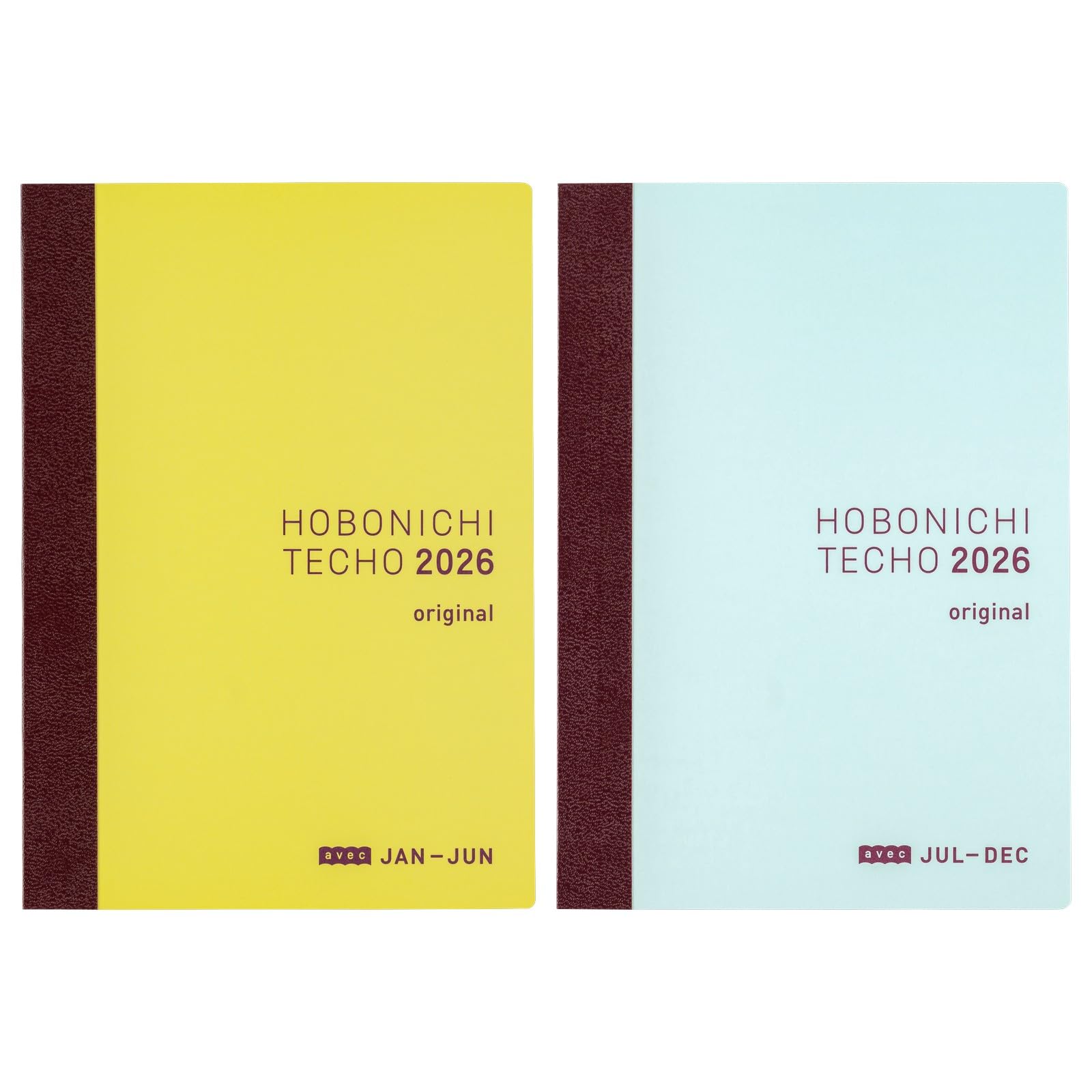
2. The planner — Hobonichi Techo A6 Original avec
If a daily notebook isn't the same as a daily planner for you, the Hobonichi Techo Original avec is the cult-favorite Japanese planner system — one page per day, Tomoe River paper, designed by Hobonichi (Itoi Shigesato's small Tokyo company) since 2002. The “avec” edition splits the year into two volumes so you're not carrying around a 600-page brick.
→ Hobonichi Techo 2026, A6 Original avec

3. The cover — Monoleather A5 Notebook Cover
Notebooks live in bags. Bags do not respect notebooks. A real cover changes the math — the book lasts longer, opens flatter, and feels finished. Monoleather's A5 cover is full-grain leather, folds back on itself for one-page writing, and has a built-in pen loop sized for a Kakuno or a Sailor Pro Gear Slim.
→ Monoleather Notebook Cover A5, Navy
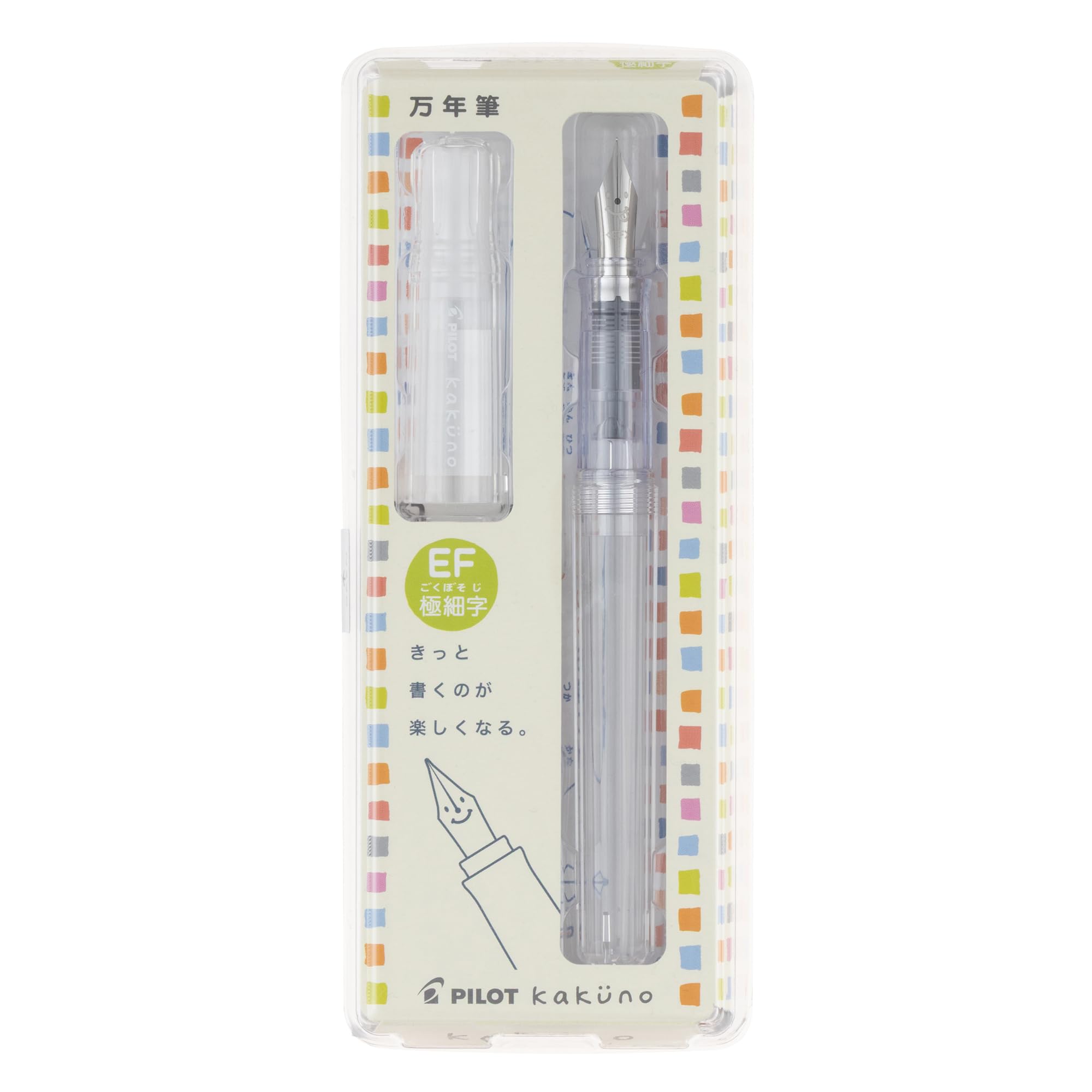
4. The daily pen — Pilot Kakuno fountain pen
The Pilot Kakuno is the entry-level fountain pen Japanese elementary schools recommend. That sounds like a backhanded compliment until you realize what it actually means: it has the cleanest nib geometry of any sub-$25 fountain pen, the cartridge-converter system is identical to Pilot's $300 Custom 823, and the smiley-face inscription on the nib is a visual indicator for which side faces up. Fine point is the safe default. Refill with a Pilot CON-40 converter and Iroshizuku ink for an upgrade that costs $20 and lasts decades.
→ Pilot Kakuno Fountain Pen, Fine Point

5. The brush pen — Tombow Fudenosuke
For when a ballpoint or a fountain pen is wrong — a signature, an envelope, a thank-you card, a name on a gift. Tombow's Fudenosuke is the brush pen used by Japanese calligraphy hobbyists and design students. The flexible-tip version gives you line variation without a brush-and-ink setup. Comes in a two-pack: hard tip + soft tip.
→ Tombow Fudenosuke Brush Pen, 2-Pack

6. The desk anchor — something that isn't stationery
The thing every Tokyo desk has that the Western Pinterest version misses: one non-stationery object that gives the desk identity. A small ceramic vessel, a glass tumbler, a stone trivet, an incense holder, a small plant in a Mino-yaki pot. It absorbs the day. It catches the eye when you look up from work. It's the difference between a “writing station” and “your desk.”
For most Tokyo desks we've seen, it's either an Aderia Tsugaru Vidro tumbler for whatever you're drinking, or a Mino-ware tea cup that doubles as a pen rest when not in use. The anchor section below has more.
If you want all of it at once: the Stationery Lover bundle
We sell four of the six components — Monoleather cover, Pilot Kakuno, Tombow Fudenosuke, and Stalogy B6 — together as the Stationery Lover bundle. One shipment, one order, save $25 against piecemeal.
→ Stationery Lover — 4-piece bundle, $134.99 (save $25)
What's in it
- Monoleather A5 Notebook Cover (Navy)
- Pilot Kakuno Fountain Pen, Fine Point
- Tombow Fudenosuke Brush Pen, 2-pack (hard + soft tip)
- Stalogy 365 Days Notebook, B6 Grid
What's not in it (intentionally)
- The planner. Hobonichi is a separate annual purchase with seasonal stock cycles. We carry the 2026 edition; pair it with the bundle if you want a separate planner alongside the daily notebook.
- The desk anchor. That one's personal. See below.
If you want all six in one shipment, add the Hobonichi and an anchor object (Aderia tumbler or Mino-ware cup) to the cart at the same time as the bundle. Everything ships together, packed by Lisa in Tokyo, with US duties prepaid.
Swap any component for one that fits you better
Each pick above is a default we'd stand behind. None of them are the only good answer. Here's where to look if a different shape fits how you work.
Notebook (Stalogy) alternatives
- Midori MD Notebook — cream-toned paper, no date markers, completely undecorated cover. Better if you want the notebook to disappear and let the writing be the only thing on the page.
- Maruman Mnemosyne — perforated, grid-printed, designed for tear-out workflow (meeting notes, sketches you want to file separately). The opposite philosophy from Stalogy's keep-everything book.
Planner (Hobonichi A6) alternatives
- Hobonichi Cousin A5 — same Tomoe River paper, full A5 size, more room per day. Better for journalers and sketchers who want margin to draw.
- Hobonichi Weeks — weekly two-page layout instead of one-page-per-day. Better if you don't write every day and don't want guilt pages.
Cover (Monoleather A5) alternatives
If you're going Hobonichi-only, the Monoleather A5 doesn't fit the A6 Hobonichi Original. Hobonichi makes its own canvas, leather, and fabric covers sized for A6 — those are the right choice when the planner is the only book you carry.
Daily pen (Pilot Kakuno) alternatives
- Pilot Metropolitan — all-metal body, more formal feel, same Pilot nib quality. The Kakuno's grown-up cousin.
- Uni Jetstream — if a fountain pen isn't your thing, this is the Japanese ballpoint that most office workers in Tokyo actually carry. 0.5mm or 0.7mm.
Brush pen (Tombow Fudenosuke) alternatives
- Kuretake Bimoji — different brush feel, slightly softer tip, available in multiple tip sizes.
- Kuretake Gansai Tambi Sumi Set — six earth-tone solid watercolors plus a brush. Goes well beyond signatures into actual painting territory; doubles as the gateway to the artist-leaning version of this setup.
What sits next to the notebook
The Western Pinterest desk stops at stationery. The Tokyo desk doesn't.
The anchor is the non-stationery object that gives the desk its personality. It's the thing your eye lands on between tasks. It absorbs the day — holds tea, catches small things, doubles as a small visual reward.
Three categories that work well on a desk:
Glass tumbler or guinomi
Cold tea, hot tea, water, an evening glass of something stronger. A single Tsugaru Vidro tumbler or sake cup adds quiet color to the desk without being precious. The Spring Night and Unkai colors photograph particularly well against natural wood or a neutral desk surface.
Small ceramic vessel
A yunomi (Japanese tea cup) doubles as a pen rest when not in use. A small bowl catches paperclips, change, the cap of the fountain pen you keep losing. Mino-ware bowls have the durability for daily handling. Hasami's indigo blue is the safest “desk-appropriate” tea-cup color.
→ Browse Mino-ware · Browse Hasami
Iron object
A small Iwachu iron trivet, a tetsubin display stand, or a cast-iron paperweight gives weight — both literal and visual. Iron develops patina over years. It's the slowest-changing thing on the desk.
Choose one. Stop at one. The anchor works because it's singular.
The starter ladder
You don't need the whole setup on day one. Layer in, smallest to largest.
One thing: the Pilot Kakuno — $27.59 delivered
It writes on whatever paper you already have. Refill cartridges last weeks. The lowest-friction entry into the setup. If the fountain-pen world is new to you, this is where it starts.
Two things: add the Tombow Fudenosuke — $51.73 delivered
Daily pen plus signature/special-occasion pen. You can run a desk on these two alone for months while you figure out the rest.
Three things: add the Stalogy B6 — $94.27 delivered
Now you have paper that handles fountain-pen ink without ghosting. Most people who buy this exact combo say it's the version of the setup they should have started with.
Four to six things: the Stationery Lover bundle — $134.99 delivered, saves $25
Adds the Monoleather cover and replaces the piecemeal math with bundle pricing. From here it's just the Hobonichi (if you want a planner) and the desk anchor.
Each step holds up on its own. You don't lose anything by stopping at two or three.
Frequently asked questions
What's the difference between Stalogy and Hobonichi?
They're built for different purposes. Stalogy 365 Days is a daily notebook — open-ended pages with date markers, dot-grid layout, ~370 pages. Use it for notes, sketches, journaling — anything. Hobonichi Techo is a daily planner — one page per day, pre-printed dates, structured for daily reflection or scheduling. Most people who do both end up with a Stalogy for free-form notes and a Hobonichi for date-anchored planning. The Stationery Lover bundle includes the Stalogy; Hobonichi is a separate annual purchase.
Do I need a fountain pen for the Hobonichi?
No, but the paper rewards one. Hobonichi prints on Tomoe River paper — thin (52gsm) but shockingly resistant to bleed-through with the right ink. A Pilot Kakuno with Pilot Iroshizuku ink is the most-recommended pairing. Gel pens (Pilot G2, Uni-ball) and ballpoints work fine too — Tomoe River doesn't punish them, but a fountain pen shows off the paper.
What ink works best for Tomoe River paper?
Most Japanese fountain-pen ink is safe. The standards: Pilot Iroshizuku (Tsuki-yo for navy, Kon-peki for blue, Take-sumi for black) and Sailor Jentle. Cheaper inks — particularly Western no-name brands with high pigment loads — sometimes show ghosting on the reverse side. If you're new to fountain-pen ink, buy a Pilot Iroshizuku 50ml bottle once and you're set for a year.
Can I use a Hobonichi-sized cover with a Stalogy notebook?
Mostly no. Hobonichi A6 covers are sized for the A6 Hobonichi (105 × 148mm). The Stalogy 365 Days is B6 (128 × 182mm), slightly larger. They don't fit each other's covers. The Monoleather A5 in our shortlist holds A5 notebooks specifically — the Hobonichi Cousin (also A5) fits, but the A6 Hobonichi Original doesn't.
How do I keep fountain-pen ink from bleeding through?
Three rules. Use a finer nib — Pilot Kakuno's “fine” is plenty; “extra fine” is even safer. Use fountain-pen-safe ink — Iroshizuku, Sailor Jentle. Let it dry before closing the page — 30-60 seconds, especially with broader nibs. Tomoe River and Stalogy paper handle this trio of habits without issue. Cheaper notebooks may not.
What if I'm left-handed?
The Pilot Kakuno and Tombow Fudenosuke both work for left-handed writers. Pilot makes a specific “lefty-friendly” Kakuno variant, but the standard fine point is also fine. The real consideration is ink dry time — left-handed writers smudge more if ink hasn't dried. Pick an extra-fine nib and an ink with a faster dry time (Pilot Iroshizuku Take-sumi, Pilot Black). For brush pens, the Tombow Fudenosuke's tip works in either direction.